Author: A. H.

  • Without your knowing

    Without your knowing

    I bought your pain
    long before you did,
    my tears carved a path from my heart,
    dry like sea salt.

    Like a dove striving for a single grain of wheat, I wove you into my being.

    Without your knowing

    How could I pour out every piece of me, already yours,
    while words and my mind were at zero

    Without your knowing

    Between a touch and a glance, with the fear of claiming you, an innocent kiss trembles on my lips,

    lying lazily in life mixed with a naive longing, stretched out upon the clouds of my mind that smell of you.

    Without your knowing

    Was it really this hard to reach just a touch, in the slight breeze of my little finger

    Look, I painted you on the walls again,
    I poured my words into verses; novels, stories, and poems knelt before you in every language.

    Without your knowing

    You always saw me,
    I always looked at you,
    You only heard my voice,
    I always listened to you,
    My hands, my heart, always left outside in the winter frost of your absence.

    My head spun from you, I was tossed into the wild green, against those lonely walls where no one passes, and I woke up to you once again with the winter sun of dawn.

    Without your knowing

    Whatever exists, I found you in everything that is and isn’t; I added their scents, colors, and sounds one by one.

    Without your knowing

    To flow heedlessly from the world right into your gaze and your skin, to feel you in me and me in you, becoming one simply in feeling, without naming it.

    Without your knowing

    As if we had met from the bottomless past of a dark star, galloping into its unknown, the only thing I knew was you.

    I searched for your gaze in streets that defy description, I caught your breath in the footprints I saw, and I kissed them, kissed them over and over.

    Without your knowing

    I forgot my lonely cheek in the warmth of your palms, my soul’s willing fall into your sweet darkness, I wanted to erase whatever makes you sad.

    Without your knowing

    Like a elfish child, I rang every doorbell of unlocked doors, 

    I asked the pessimist, suffering, homeless ones for the definition of love.

    My emotions were utterly lost at wrong addresses, doors and windows had long since fallen to ruin before I even reached you.

    Without your knowing

    Yet the whole universe had long gone into mourning, while my supplications had somehow mingled with the clouds, weeping all along.

    Without my knowing

    written by Aşur Horoz
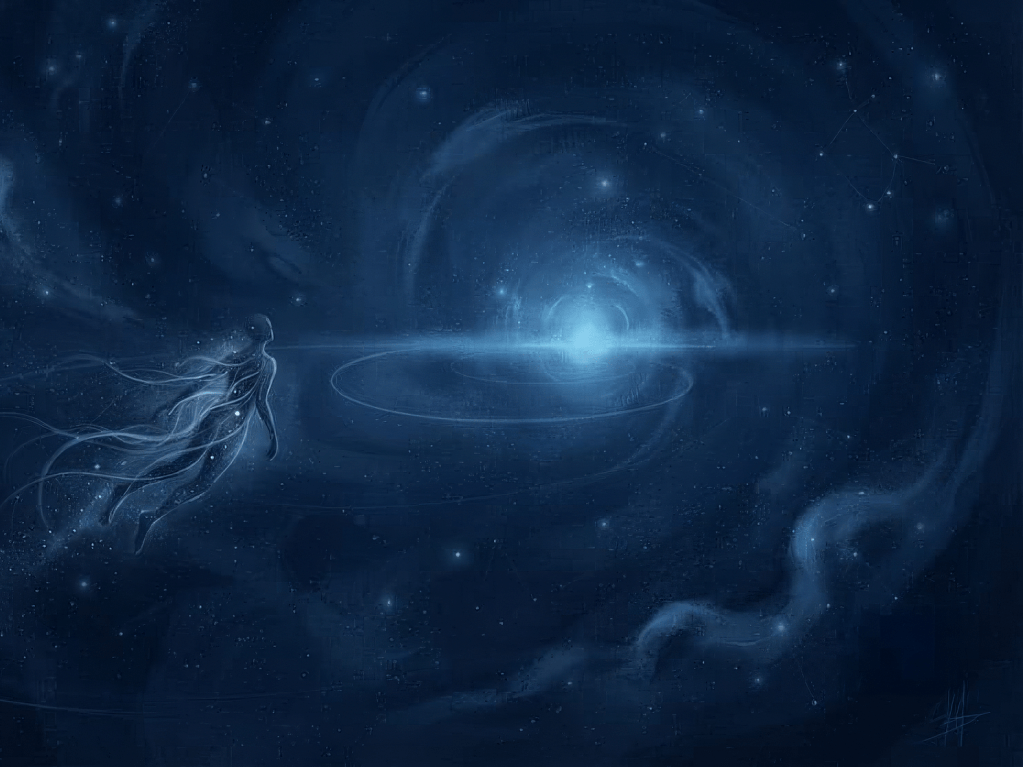
  • As if something else

    As if something else

    Not in Sartre’s existence,

    Not in Nietzsche’s nothingness,

    Not in the indescribable dreams through Freud’s lens,

    Not in Rumi’s azure serenity,

    Not in Kundera’s unbearable lightness,

    Not in the mythalogical trial of the Odyssey cast by Homer,

    Not even in the lexicon of artificial intelligence,

    Yet a bit in Omar Khayyam’s black-grape drunkness,

    Playing alone at the edge of a bottomless abyss,

    In the blinking of ancient genes waiting for millions of years for their moment,

    Like a weary earthly courier wandering through the wormholes of a dark star,

    In an indescribable uncertainty, at the yet unnamed birth of a waiting synthesis.

    written by Aşur Horoz

  • What is it to love

    What is it to love

    Is it your mothball-scented gaze,
    burdened with the weight of years?

    Is it the reckless touch of your hands,
    daring to face crucifixion?

    Is it the dance upon the shuddering skin,
    of a delicate frequency flowing from your inner depths?

    Or, is it to deny the entire universe,
    and become imprisoned in an unlockable drunkness of the mind?

    Is it to melt away from within,
    behind unbidden, ill-fitting masks?

    Is it to unleash your most ineffable screams of “enough,”
    and retreat into your own obscurity?

    Is it to exist with your true essence, if only briefly,
    in a weary yet tranquil nothingness,
    within the drunkness of a bottomless well?

    Is it to cry out to the whole world,
    spilling onto a poem or a canvas?

    Is it to still endure among those who say “in vain, all in vain,”
    and to scatter endlessly, even if reduced to ash?

    Is it to cling, involuntarily, to undeserving flesh?

    With every touch,
    with every inhalation of a scent,
    is it to search for age zero?

    And when your existence departs into desolation one day,
    is it the breath of the pavements you left behind in trust?

    Written by Aşur Horoz

  • The Ocean of The Subconscious

    The Ocean of The Subconscious

    The mind, bearing the traces of millions of years of experience, is like an archaic heritage waiting to settle into the folds of our brain before we even step onto the stage of existence.

    This process, which begins while the individual is still a zygote, is shaped by the imprints left on the cerebral cortex by the external world. For some, this mind is a thick curtain that lets no light through but operates at the speed of light; for others, it is a transparent veil. In reality, it is encoded within clusters of information called neurons, formed by a synthesis of innate instincts and the external world, masking the emotions that reside in the limbic system.

    While emotion is a roar encoded in humans for millions of years, the mind has attempted to suppress this natural flow for thousands of years through the taboos brought about by socialization. Yet, no matter how much a human tries to cover it up, those deep-rooted emotions (sexuality, hunger, anger, etc.) find a way to emerge into the light, becoming encoded anew with each expression by merging with fresh experiences. These formations are never entirely “untouched”; within every good, there lies an evil, and within every evil, a good. This balance is directly related to what the individual brings from their past.

    The obstruction of this internal flow is carried out by structures called “morality,” which serve as a social dam. Elements of the superego—such as customs, culture, tradition, laws, and beliefs—are like a “complex of behaviors” built not to kill emotions, but to domesticate them and generate energy. However, the real problem lies not in the dam itself, but in who manages the floodgates and with what intention. Individuals establish these structures for social order; yet over time, these structures transform into independent authorities and begin to inhibit the natural flow of emotion with sanctions like “forbidden” or “sin.” Every suppressed emotion leads to mental blockages, maladaptive behaviors, and chronic physiological disruptions in the individual.

    In this subconscious ocean, encoded consciously or unconsciously by internal and external sources, much is hidden. At times, it escapes our control; at others, we express it exactly as we desire. In this context, those engaged in literature and art practice the art of expressing this subconscious. The most powerful tool man uses while externalizing these mental and emotional fluctuations is language. It is here that James Joyce emerges as a peerless example. Joyce possesses a linguistic anarchism that deconstructs language into its atoms, shattering linear logic—much like Van Gogh’s colorist roar in painting, which tears nature away from its objective reality and transforms it into an internal fire. In Van Gogh, we see an expressionism blended with his own unique subconscious world.

    Joyce and Van Gogh are the most concrete proofs of how social dams can transform into explosions of genius. Joyce reconstructed the static dams of the mind by passing them through his own internal black holes, creating a unique dynamic. Against the shallow waters that society deems “reasonable,” Joyce maintained his transparent existence by swimming in the depths of the ocean.

    The difficulty the majority faces in understanding Joyce, especially his masterpiece Ulysses, can be attributed to two reasons: first, the resistance of people with weak insight who cannot enter the ocean of their own subconscious; and second, Joyce’s lack of concern for being “understood.” On the contrary, he is an expressionist who lays bare whatever exists in his subconscious, provoked by both internal and external stimuli. In other words, he uses language through a stream of subconsciousness. Fitting an entire universe (Homer’s Odyssey) into a single day in Ulysses was only possible by moving away from the shallowness of the conscious world and transforming within the corridors of the subconscious. While the quest, fear, and desire to reach the goal in Homer’s Odyssey find their correspondence in the external world—lasting for years in a physical ocean—Joyce reconstructs this ancient adventure through the human stream of consciousness. Thus, he fits the entire odyssey into a single day within the ocean of the subconscious.

    Diving into these depths is an effort that can only be shown by those who are not afraid and are capable of swimming in the darkness of the ocean.

    written by Aşur Horoz

  • it’s time

    it’s time

    it’s that time again,

    leftover relationships 

    you know,

    the second-hand infertile chats.  

    sometimes you surrender

    to the role of foster child 

    with a shaved head

    of the space-filling ambience.

    the so-called thinkers’ ‘worthy’ invitations

    to their social circus

    and 

    their conceptual masturbation.  

    genes that can not find their names

    being sold on cheap tables

    or a value that has taken

    its name flies away 

    without finding a skin to land on.  

    full of androamoeba in around

    with confused identities, 

    and 

    marriage certificates in their hands.  

    to feel like drowning in

    genetically distorted meanings

    and the hymns of digital saints

    in the coldness of the keyboard.  

    the weight of the past left on a torn shirt  

    without a latch 

    hanging on an abandoned porch.  

    a world in where love is represented

    only in the body fluid,

    and whoever objects to this 

    doesn’t even belong in

    an unrecyclable rubbish dump.

    ‎ 

    taboos, 

    totems, 

    dogmas, 

    indulgences,  

    cultures, 

    and stale ideologies mingle,

    as if they are preparing

    for a painful new birth 

    to unknown hopes and problems.       

    ‎ 

    written by Aşur Horoz