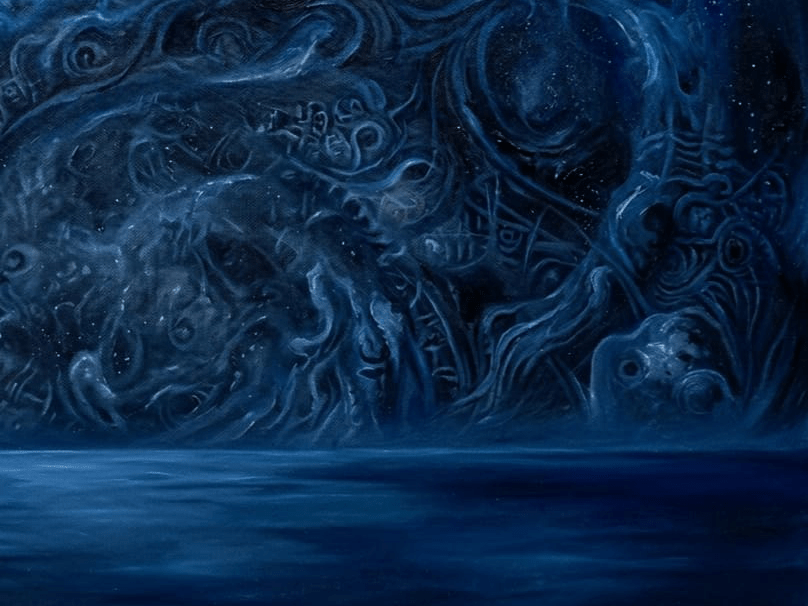
The mind, bearing the traces of millions of years of experience, is like an archaic heritage waiting to settle into the folds of our brain before we even step onto the stage of existence.
This process, which begins while the individual is still a zygote, is shaped by the imprints left on the cerebral cortex by the external world. For some, this mind is a thick curtain that lets no light through but operates at the speed of light; for others, it is a transparent veil. In reality, it is encoded within clusters of information called neurons, formed by a synthesis of innate instincts and the external world, masking the emotions that reside in the limbic system.
While emotion is a roar encoded in humans for millions of years, the mind has attempted to suppress this natural flow for thousands of years through the taboos brought about by socialization. Yet, no matter how much a human tries to cover it up, those deep-rooted emotions (sexuality, hunger, anger, etc.) find a way to emerge into the light, becoming encoded anew with each expression by merging with fresh experiences. These formations are never entirely “untouched”; within every good, there lies an evil, and within every evil, a good. This balance is directly related to what the individual brings from their past.
The obstruction of this internal flow is carried out by structures called “morality,” which serve as a social dam. Elements of the superego—such as customs, culture, tradition, laws, and beliefs—are like a “complex of behaviors” built not to kill emotions, but to domesticate them and generate energy. However, the real problem lies not in the dam itself, but in who manages the floodgates and with what intention. Individuals establish these structures for social order; yet over time, these structures transform into independent authorities and begin to inhibit the natural flow of emotion with sanctions like “forbidden” or “sin.” Every suppressed emotion leads to mental blockages, maladaptive behaviors, and chronic physiological disruptions in the individual.
In this subconscious ocean, encoded consciously or unconsciously by internal and external sources, much is hidden. At times, it escapes our control; at others, we express it exactly as we desire. In this context, those engaged in literature and art practice the art of expressing this subconscious. The most powerful tool man uses while externalizing these mental and emotional fluctuations is language. It is here that James Joyce emerges as a peerless example. Joyce possesses a linguistic anarchism that deconstructs language into its atoms, shattering linear logic—much like Van Gogh’s colorist roar in painting, which tears nature away from its objective reality and transforms it into an internal fire. In Van Gogh, we see an expressionism blended with his own unique subconscious world.
Joyce and Van Gogh are the most concrete proofs of how social dams can transform into explosions of genius. Joyce reconstructed the static dams of the mind by passing them through his own internal black holes, creating a unique dynamic. Against the shallow waters that society deems “reasonable,” Joyce maintained his transparent existence by swimming in the depths of the ocean.
The difficulty the majority faces in understanding Joyce, especially his masterpiece Ulysses, can be attributed to two reasons: first, the resistance of people with weak insight who cannot enter the ocean of their own subconscious; and second, Joyce’s lack of concern for being “understood.” On the contrary, he is an expressionist who lays bare whatever exists in his subconscious, provoked by both internal and external stimuli. In other words, he uses language through a stream of subconsciousness. Fitting an entire universe (Homer’s Odyssey) into a single day in Ulysses was only possible by moving away from the shallowness of the conscious world and transforming within the corridors of the subconscious. While the quest, fear, and desire to reach the goal in Homer’s Odyssey find their correspondence in the external world—lasting for years in a physical ocean—Joyce reconstructs this ancient adventure through the human stream of consciousness. Thus, he fits the entire odyssey into a single day within the ocean of the subconscious.
Diving into these depths is an effort that can only be shown by those who are not afraid and are capable of swimming in the darkness of the ocean.
written by Aşur Horoz


Leave a Reply