Category: Philosophy

  • it’s time

    it’s time

    it’s that time again,

    leftover relationships 

    you know,

    the second-hand infertile chats.  

    sometimes you surrender

    to the role of foster child 

    with a shaved head

    of the space-filling ambience.

    the so-called thinkers’ ‘worthy’ invitations

    to their social circus

    and 

    their conceptual masturbation.  

    genes that can not find their names

    being sold on cheap tables

    or a value that has taken

    its name flies away 

    without finding a skin to land on.  

    full of androamoeba in around

    with confused identities, 

    and 

    marriage certificates in their hands.  

    to feel like drowning in

    genetically distorted meanings

    and the hymns of digital saints

    in the coldness of the keyboard.  

    the weight of the past left on a torn shirt  

    without a latch 

    hanging on an abandoned porch.  

    a world in where love is represented

    only in the body fluid,

    and whoever objects to this 

    doesn’t even belong in

    an unrecyclable rubbish dump.

    ‎ 

    taboos, 

    totems, 

    dogmas, 

    indulgences,  

    cultures, 

    and stale ideologies mingle,

    as if they are preparing

    for a painful new birth 

    to unknown hopes and problems.       

    ‎ 

    written by Aşur Horoz

  • Metaphysical Nonsense

    Metaphysical Nonsense

    “All men by nature desire to know. An indication of this is the delight we take in our senses; for even apart from their usefulness they are loved for themselves; and above all others the sense of sight. For not only with a view to action, but even when we are not going to do anything, we prefer seeing to almost everything else. The reason is that this, most of all the senses, makes us know and brings to light many differences between things.”  

    Is it the inadequacy of our capacity for wonder that diminishes our metaphysical will to think, or simply a powerful curiosity toward God? We seek to integrate, dialectically, our hatred for the sensory world—with all its decay and corruption—with our quest for a flawless realm. Kant’s greatest naïveté lies in believing that from the concept of a transcendental world one could ascend to God.

    Though we know intellectually that the senses deceive—and that from birth we confront only “purely phenomenal” realities—we have still pursued truth within those limits. We have endlessly tried to unite our boundaries with our aspirations for the absolute. We searched for the “thing-in-itself” with our senses, yet we failed to extract identity from what we found.

    Plato’s theory of Ideas aimed, above all, to resolve the problem of ontology—just as Aristotle’s metaphysical substances sought it. Thus we deified these two giants, adorning them with meanings they never possessed. We shaped the history of thought by a desire to discover a truth we could not fully grasp. We draped the rules of logic over perception, then pitted that ornate perception against our sense of transcendence.

    The more refined and valued an object or a person became, the stronger grew our curiosity that thoughts might be still more precious. Yet no matter how far we advanced, we always returned to Plato. Whenever we tried to flee, we met him again at our point of departure. We perfected our systems, but always traced our origin back to a single act. We unified the totality of our beginnings and our fragments into one and the same singularity.

    We sought elevation: summoning seven plus five to gain knowledge of space and time. We concocted the absurdity of “synthetic transcendence.” We ended up alone. We staked our all on being unloved—but persisted in systematizing. We became certain that one thing could never be another, yet ignored the act of cognition that binds the two. We criticized relentlessly, only to uncover empirical realities we could not comprehend.

    We squandered our genius on the EPR path to ensure a deterministic universe. For the sake of not thinking metaphysically, we denied God’s fallibility—calling Him immutable, yet casting dice. Now we cloak the transcendent in our phenomena, and forget probabilities through induction. With each accumulation of knowledge, we continue to err.

    However hard we strive, we cannot escape normalization. Infinity or zero; zero or one. We remain mere synthetic fools.
  • God is Dead

    God is Dead

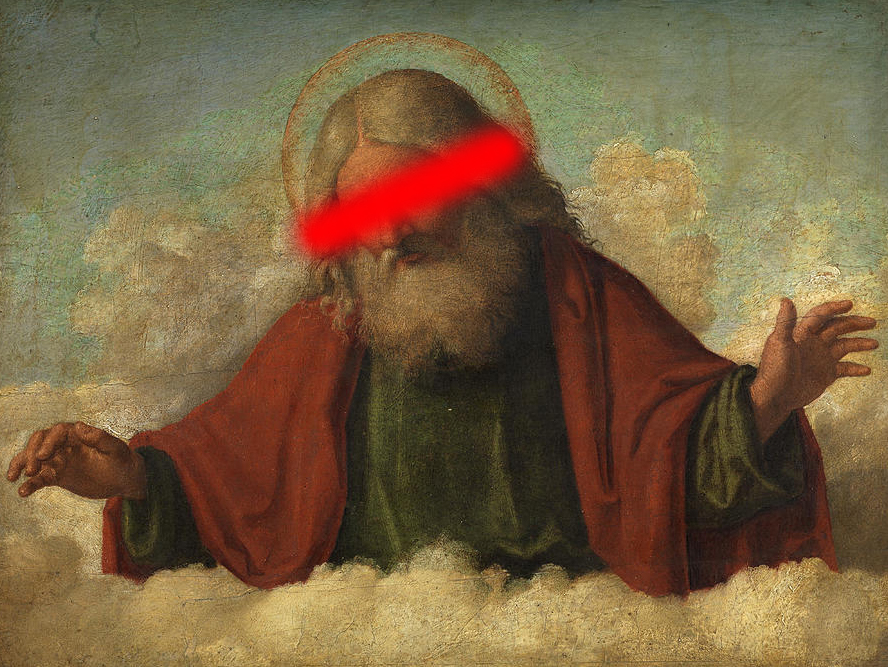
    God has long been dead; haven’t you heard? It was the clergymen who killed God, it was the end of the perpetual flow of prophets that killed Him, it was our own awakening to the sanctity of our flesh that did it. It was God himself who killed God. With His passing, He dragged our long-held traditions over the edge of the abyss. What remains? A profound meaninglessness, an insatiable hunger for discovery. People now find themselves drawn inward rather than outward; humanity seeks Him not above, but below! A lost generation finds its meaning in the void of hormonal pleasures—had they known that God was dead, they wouldn’t even be aware that their pleasure would be discovered not in the lower parts of the body, but in the higher realms.

    If we were to free ourselves from all our taboos, wouldn’t a completely empty world be left—a world filled with an infinite number of flowers waiting to be named? It is precisely at that moment that our virtues will bloom, that our innermost selves will awaken. Then we shall discover a new god in nature, within the grasp of our intellect. Man is made for exploration, and even more so for the exalted contemplation of that which he cannot fully uncover. What is this obstinacy, if not the attempt to normalize the trivialities we fail to understand? First, we must strike down our customs; first, we must trample our traditions underfoot; first, we must ignite the true battle against our entrenched beliefs.

    They do not know what nihilism truly is—that it is the genuine proof of life. It is the righteous and honorable resistance of a people crushed under an iron rule, the ultimate weapon of all those who have been silenced and shackled. The life found in the sun’s dying rays, the path that emerges in the night sky—this is our way. Man must first kill his god so that he may begin to live a new life. Man must embrace new gods… forged from the mineral pigments within the earth, from the legacy of the lights in the sky!

  • Everything Flows…

    Everything Flows…

    I am changing, we are changing. Change is the inevitable truth of existence. We strive—often without realizing it—to adapt to life’s ever-changing conditions. Everything flows… one never steps into the same river twice. We despise humanity, daring enough to claim that everything comes from fire, following in the footsteps of Heraclitus. We go to a temple, worship in order to think, and sanctify ourselves by escaping from humanity.

    We do not wish to be understood but to express. We fear that if we are understood, we will be considered one among the masses; from the peak of our intellectual ivory tower, we look down on everyone. We read, and we try to make what we read our reality. We believe, trusting the truths we think we know, for we understand that if we do not have faith in information, we cannot inscribe it into our minds. We feel secure in a room surrounded by books, yet we fear the realities beyond its walls. When we are convinced that the room will transform us, we also know that nothing will ever change.

    We are growing old, time flows… Aging is a form of change; with each passing day, the romance in our reflection evolves. We become increasingly numb to life’s meaninglessness, yet perhaps as we age, we long to believe even more. We sense that the ease of learning we enjoyed in our youth has dulled, and that letting go of our beliefs has become ever more difficult. We miss our daring youth.

    Life is in constant flow. Even if we isolate ourselves from society, we see the changes in our surroundings. It is as if, having spent our entire lives in a primitive African tribe, we remain alien to change. We struggle to discern the multiplicity around us. We are overwhelmed by the abundance of plurality, and we find no other recourse but to repeatedly seek refuge in ourselves just to breathe. We are in a state of constant change, yet the reality we yearn for is always found in the existence and nothingness within our mother’s womb. Perhaps that is why our most peaceful—and simultaneously most restless—moments reside in our bare self, hidden under the blanket in the darkness of night.

    Constant change, a life of infinite possibilities, our non-existent idea of what to do, the persistent feeling of inadequacy, our inability to make sense of what we read… Perhaps the golden rule of life is to grasp a few of the continuously flowing thoughts. If we hold on, maybe we can halt change; if we hold on, perhaps we can be happy…

  • God Is Zero

    God Is Zero

    God is zero. God is the beginning, the zero in the universe’s first second. He is our ever-absent coefficient of cognition. He is the quest for meaning in the equality we use in mathematical equations. He is the nothingness in a universe where nothingness does not exist. He is the a priori knowledge within everything. He is the eternal reality indicated by all adjectives. He is both within and outside the cosmos—not a consciousness, but consciousness itself. His memory is infinite; everything happens through him. He has no thought, yet he is responsible for the formation of every thought we have. He is unaware of us, yet everywhere we look we receive word of him.

    He did not emerge in Mesopotamia; he exists in time itself. He is not simple enough to be exploited by humans for their own purposes. He has his own laws and rules. He is both the beginning and the end of change. Everything comes into being through his transformation. The only thing we know is that he is the unit of our understanding of order amid a chaos. Everything has come together at once, yet he is not one; he is zero. Zero is sacred because it exists solely as the beginning.

    The nonexistence of something does not mean it is not there; that something is part of nature, and it is within our power to bring it into existence. Just as we cannot imagine what we do not perceive, we try to liken to that which we perceive those things about which we have not found the slightest evidence. Since what we perceive is nature, we have no other reference system than nature for the things we seek. The human mind is too limited to comprehend infinity because the fundamental coefficient of our axiomatic thought is zero—and zero is our cognition, our god.