Category: Literature

  • Crumbs of Happiness

    Crumbs of Happiness

    Sometimes, I just want to be erased. The words I’ve spoken, the warmth I’ve left on my chair, the fingerprints on my coffee cup. I want to disappear like a speck of dust in some forgotten corner and become the joy of the gleaming surface left behind. What wouldn’t I give for a world where my erasure is seen not as sorrow, but as relief? Living is hard. And I think I am someone too powerless to endure this arduous journey. In a mind built upon failures, I can’t even reach the crumbs of happiness. I watch, envious, as the people who care for me envision my imagined rise. I just want to vanish—in an instant, in a fleeting second, in a breath.

    In my dreams, I am met with cries of people calling out to me. I run from them, trying to hide in a corner, but my hopeful waiting is always shattered when they find me in my solitude. I kneel before them, begging for them to let me go. Even before the day begins, I see my own helplessness within the dreams that drain my hope. Tears stream from my eyes as I mourn a life I have failed to live. I grieve the emptiness at the center of the applause meant for me. I grieve the nothingness left of my lost youth. I grieve the disappointment etched on the faces of those I had only just begun to feel close to.

    They ask me why I feel the need to disappear, yet they never look into my eyes. They do not see the void where I once existed. They do not know the pain of being unheard. They do not hear the echo of my footsteps filling my room. They do not know that in my mind, I am running, screaming, tearing through thoughts in desperate chaos. They do not know that no matter how hard I try, I cannot become just anyone. They do not know that I would give everything to simply be one of them. They only call out, they only cheer, they only elevate me—yet they do not know that I am still just me…

  • Tell Me, My God

    Tell Me, My God

    Everywhere I turn, I see you. Though I can never find you out there, I take refuge in the you that lives within me. I worship you, tempting you to think that I choose you above all others. In every moment of my life, I carry you in the landscape of my mind. I dream of banishing you from my heart, yet every path those dreams trace leads me straight back to you. I read and discover your footprints… I look outside and behold a world made of you… I run away, but I cannot imagine escaping you…

    Why do I still love you, oh God? Why, even after betraying you, do I refuse to let you go? Why do I keep recreating you in every alternate universe? Why, having rejected you so many times, do I feel myself falling in love with you all over again? Why do I still drown in your sacred pages? Why do I not strive to be as humble as you? Why, when there is another way to live, do I choose to live inside you? Oh God, tell me: why, because of my choices, do you make me suffer in your hell? Oh God, tell me: why do you make me feel so intensely?

  • Indispensable Solitude

    Indispensable Solitude

    Loneliness is the unshakable truth we first encounter in the tranquil embrace of the womb. From the moment we are born into humanity, we seek to escape it. We hide in corners, letting the darkness envelop us in its quiet serenity. From our earliest years, we feel the need to return to where we came from, because on this lonely planet, we are never truly alone. We build tents to retreat into, seeking refuge from the world. Our dreams take shape in the dark, a sanctuary from the pain of reality. We always yearn for change, believing that once it arrives, everything will be different—yet deep down, we know that nothing ever really changes.

    We set out to leave, yet the moment we take our first step forward, we are already searching for a way back. We resent the walls of our home, yet we spend our days longing to return to them. We attach ourselves to new objects, convinced they will transform us. We open new books, only to abandon them after the first few pages. Everything we do is an attempt not to think. But no matter how hard we try to escape our own minds, we always end up back in the darkness, thinking. Perhaps that is why we imagine hell in shadows and heaven in light.

    We cling to our social circles, fearing isolation, yet we grieve the time they steal from us. We wake each morning to waste time, only to lament its loss by nightfall. We resist sleep, haunted by the thoughts that visit us in the silence, believing rest to be a waste—when in truth, we squander time in every waking moment. We enter our jobs with passion, only to grow to despise them in the years that follow. We endure years of schooling, resenting every step along the way, yet later, we look back on those days as the best of our lives. Humanity thrives on forgetting, and in the scattered remnants of what we have lost, we search for fragments of happiness.

    Every time we long to be free like a bird, all we do is peck at the forgotten crumbs left behind. Everything flows forward, and the only thing that remains with us is the silhouette smiling back from the mirror.

  • The Illusion of Something

    The Illusion of Something

    Imagine a society—a realm where those who have not found a purpose in life endure profound suffering. From this suffering emerges a purpose, and with it, a so-called free will that marches in its name. The spoken words are later romanticized and committed to record, proclaiming a purpose that, though deemed immutable, shifts and evolves with each utterance. It is a culture that enfolds all, yet its consequence is to regard those, reduced to worm-like beings, with slavish disdain—a tithe extracted from bowed necks that nourishes the very purpose forged, a void chasing those too fearful to face the outcome of existence.

    There are those who lie merely to echo the prevailing views of the multitude; those who, when the pressure mounts, retreat into the purpose they have fashioned—bending and twisting it to guide their way. Observe the ostentatious avenues of thieves who, to mask their hunched visages, pilfer the fruits of society’s labor; those who, terrified of thoughts breaking free, yearn for the bliss of collective ignorance; and the base toxins mingled in the spittle hurled from podiums, each drop a testament to decay.

    A system asserts that anyone may don the guise of a clown—hopes painted onto faces and eyes, only to vanish with each cycle. The fools, gripped by a dread of the cold bed, risk everything to preserve the warmth of their bodies; the monkey dances performed before mirrors in their midst; the hostile stances taken against those who stray from the common lane on a busy street; the familiar privileges reserved for reflections that mirror one’s own; and the smiles on ape-like visages emerging as spoken falsehoods fade into oblivion.

    Consider yourself—your actions, manipulated without intent. When night falls and eyes close, notice how the genuine thoughts behind the whisper of your inner voice gradually yield to a monotonous uniformity. Rediscover the yearning to know those truths once feared; recall the dizzying moment of first recognizing your errors; feel the trembling distraction emanating from the object clutched in your hand. Contemplate all that bars you from true thought—simply think, for it is precisely our failure to think that has rendered us as we are.

  • Love…

    Love…

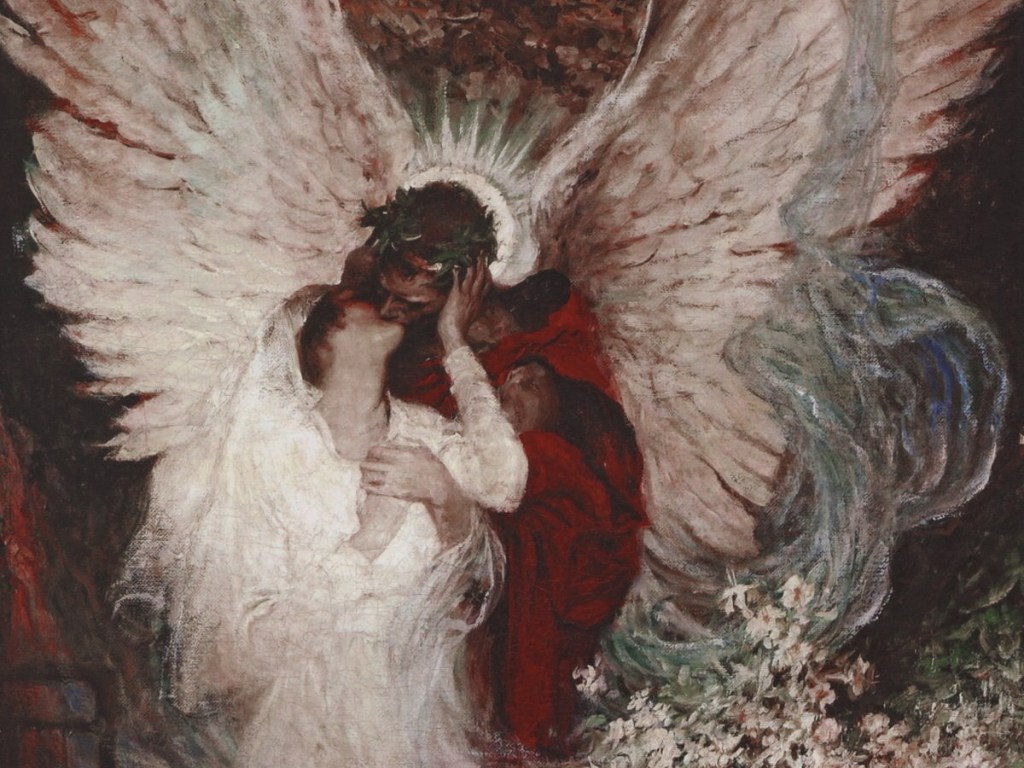
    Love is the greatest sin. It is that which, as it trembles within your cold and lonely self, brings the sun into being in the blink of an eye. It is what brings the ever-distant god—darkened by your eyes—right before you. It is a moment, a fleeting glimpse, a transient feeling. It is a ritual you swear you won’t perform every night, yet every morning you do it again. It is a verse on the page of holy books, the reason for your heartbeat, the irrationality of your mind. Love is everything you have rejected.

    Even if he wanted to, he woke up without thinking of anything else. Seeing her portrait on the ceiling, he smiled. He closed his eyes—not to see, but to feel; to repeatedly conjure his dream in his mind. He thought, “There is a moment”—the moment when logic takes command of the mind and forces its focus back onto life to fulfill its obligations, the very moment when one struggles to stay in bed. He had known since the first moment of the day that the reality of life would kill his imagined happiness. And that knowing would offer no solution either…

    Love is like a belief. It is an experience in which you disregard the truths you think you know, become ensnared by an idea, and leave behind a person you no longer recognize when you look back. It is an experience where you lose your capacity for rational thought and find meaning amidst all absurdities, binding the entire purpose of your life to that person.

    In the home where he realized he knew nothing, he unconsciously completed his necessary routines and took his first step into streets of which he was unaware. He was walking yet not seeing, thinking yet knowing nothing; his mind was like that of a prisoner straining to catch sight of the moon through the bars of a cell window. By the time he noticed the smile on his face, he had long since left home.

    Is loving and being in love the same thing? We feel someone like being struck by a violent lightning bolt, and soon that intensity diminishes, giving way to a less forceful but enduring state of emotion—the continuity of which defines our idea of love. We eventually come to realize that everything we remember about our relationships, after a certain time, consists only of the meanings we imposed on the other during its most intense phase.

    As he passed by, he trusted people who, like little ants, moved along; he found them close to him, and he respected the bitter stories hidden within their monotonous exteriors. For the first time, he felt close to society—rejecting the notion that they had marginalized him—and he no longer imagined a scenario where he was excluded. The place of his thoughts, once estranged from life, had changed. How was it that the society from which he had long separated himself had now embraced him?

    Our effort to find our place within society might be limited to one person; when we harbor intense feelings for that right individual, we shatter those chains and have long since carved a niche for ourselves within them. Breaking our chains is intertwined with love; if we feel that overwhelming emotion toward someone, our romance extends to all of humanity.

    He took a deep breath as if he had never done so before, letting the excitement—fueled by his accelerating heartbeat—allow him to feel once more the melody of his heart. The lyrics of a song converged into a single name, constraining the freedom of his thoughts. He thought, “A life worth living for her, things in life so precious that they are experienced only a few times…” Is love an entity that creates things worth living for, or merely a phenomenon? All he knew was that, deep within his soul, there were things that poisoned him—things worth living for. The image that haunted his mind, the longing without limits, the admiration he felt for every word that left her lips, the love he held for her presence—all of it merged into the singular dynamic of his thoughts.

    Was love the unattainable desire? When we reach the person we long for, will we ever feel emotions as intense as before? Perhaps it was a reflection of the profound emotional burden that the sorrow of unattainability imposes on the human mind. Maybe our goals themselves are mere pursuits of that desire, which is why, even upon reaching them, we never achieve satisfaction—we always feel something is missing, the determination we lost along the way. Determination, love, hope, path, goal… all are, in essence, the deep sorrow of unattainability.

    She always appeared before his eyes as a silhouette so near, yet in truth she was so far away as to be unattainable. Perhaps he was being deceived by love; could it be that the intense emotional state wrought by humanity was misleading him? He had been deceived, by a passion so intense… Perhaps humanity’s fundamental flaw lies in its inability to recognize when it is being deceived. With senses shutting down in dark alleys and thoughts awakening within them, he moved forward. What had he done today? He had thought of her… so fragile that he remained oblivious to the rule of life.

    What is it that makes love, love? Is it the burst of emotional intensity that quickens our heartbeat and perhaps creates an identity for the person we love—a persona that may never truly belong to them, shaped by the meanings we assign? A burst that seems endless at first, but eventually gives way to habit.

    The first thing he noticed upon entering his home was that he still had not awakened. He had been lulled to sleep by love and roused by love. He was treading the liminal line, worshiping hell, and hating heaven… Love is that which transforms our hell into heaven and diminishes the irresistible pull toward the distant gates of paradise; perhaps love is the most beautiful dream of all.